

Facing foreclosure? Government loan modification programs can help you keep your home by adjusting your mortgage terms to reduce monthly payments. These programs are designed to assist homeowners dealing with financial hardships like job loss, medical expenses, or reduced income. Here’s what you need to know:
- What is loan modification? It permanently changes your mortgage terms to make payments more affordable, often by lowering interest rates, extending loan terms (up to 40 years), or deferring missed payments.
- Key programs available: FHA, VA, and federal programs like HAMP and the Homeowner Assistance Fund (HAF) offer tailored solutions, including payment reductions and financial relief for overdue expenses.
- Steps to apply: Gather required documents (income proof, hardship letter, bank statements), communicate with your loan servicer, and complete a trial period to qualify for permanent modifications.
- Legal assistance matters: Errors in the process or missing paperwork can delay or deny your application. Professional legal help ensures accuracy and protects your rights.
Act quickly – early action increases your chances of saving your home. Combine government programs with professional support to stabilize your finances and avoid foreclosure.
How Government Loan Modification Programs Work
What Loan Modification Means
A loan modification involves making permanent changes to the terms of your existing mortgage to create a more manageable payment structure over the long term. Unlike refinancing, which replaces your current loan with a new one, or forbearance, which temporarily lowers or pauses payments, a modification adjusts the terms of your existing loan. The primary goal is to bring your monthly payment to around 31% of your gross income.
Now that we’ve clarified what loan modification is, let’s dive into the key features that make government-backed programs effective.
Main Features of Government Loan Modifications
Government loan modification programs aim to make mortgages more affordable by altering their terms. These modifications often include strategies such as:
- Lowering interest rates: Sometimes reduced to as low as 2%.
- Extending the loan term: Terms can be stretched up to 40 years.
- Principal forbearance: Missed payments are deferred to a later date.
- Principal reduction: In some cases, the loan balance itself is reduced.
Programs like the Home Affordable Modification Program (HAMP) provide clear guidelines for loan servicers, instructing them to first lower interest rates, then extend loan terms, and finally apply principal forbearance to meet target payment levels.
Before HAMP, the lack of standardized practices among loan servicers and investors often left homeowners without consistent or adequate relief. With HAMP’s introduction, the proportion of private loan modifications that successfully lowered monthly payments more than doubled. For example, data from the second quarter of 2025 reveals that 61% of modifications included principal forbearance, highlighting its critical role in reducing monthly payments.
To make these modifications permanent, borrowers must first complete a trial period, which requires three consecutive months of on-time payments at the reduced rate. Various government programs offer tailored solutions. For example:
- FHA and GSE programs: These often include flexible options like principal forbearance or term extensions.
- VA Home Loan Program: Recent changes under the VA Home Loan Program Reform Act (enacted July 30, 2024) have expanded options for veterans. These include partial claims of up to 25% of the loan amount. Veterans can choose repayment methods such as lump sums, increased monthly payments, or deferring payments to the end of the mortgage. However, VA partial claims cannot reduce the loan principal or subsidize payments over time.
To encourage participation and ensure long-term success, government programs provide incentives for borrowers, loan servicers, and investors alike. This shared commitment helps create a more stable outcome for everyone involved.
What Is Loan Modification And How Does It Help? – CountyOffice.org
Federal Programs That Help Homeowners Avoid Foreclosure
In 2025, several federal programs continue to support homeowners struggling with mortgage payments. These initiatives aim to provide financial relief or restructure loans, helping people avoid foreclosure and regain financial footing. Let’s dive into how programs like the Homeowner Assistance Fund (HAF) are making a difference.
Homeowner Assistance Fund (HAF)
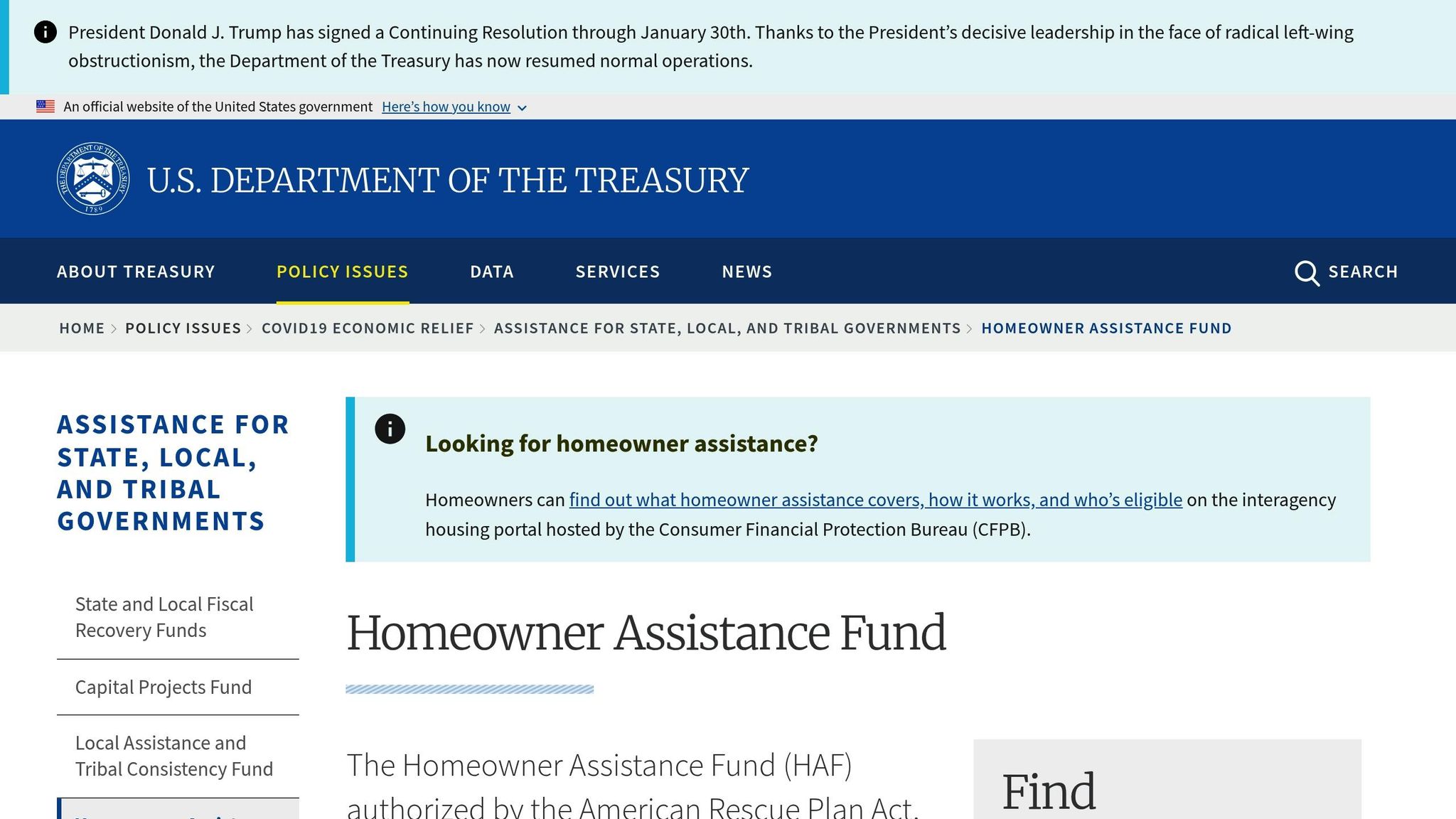
The Homeowner Assistance Fund offers direct financial relief to homeowners at risk of foreclosure. Unlike programs that modify your mortgage, HAF provides funding to help cover overdue housing-related expenses.
By June 2024, HAF programs had assisted over 549,000 homeowners, helping them avoid mortgage delinquencies, defaults, and foreclosures. These funds can be applied toward:
- Overdue mortgage payments
- Past-due property taxes
- Homeowners insurance premiums
- HOA fees
- Utility bills tied to your home
HAF can be especially effective when paired with a loan modification. While HAF helps you catch up on missed payments, a loan modification adjusts your mortgage terms to make future payments more manageable.
Each state runs its own HAF program, so the eligibility requirements and application process may vary. Typically, you’ll need to show evidence of financial hardship – such as job loss, reduced income, or increased expenses – that impacts your ability to cover housing costs. To learn more about HAF assistance in your state and how to apply, reach out to your state’s housing finance agency.
While HAF targets immediate financial challenges, FHA and VA loan modifications focus on creating long-term payment solutions.
FHA and VA Loan Modification Options
Borrowers with FHA and VA loans have access to tailored programs designed to restructure their government-backed mortgages.
FHA Loan Modifications
For FHA borrowers facing financial hardship, two key loan modification options are available:
- Standalone Loan Modification: This option permanently adjusts your mortgage terms by adding any overdue amounts to your principal balance and extending the loan term at a fixed interest rate.
- Combination Loan Modification and Partial Claim: This combines a loan modification with a partial claim to address past-due amounts, potentially including part of the principal balance.
Changes to FHA mortgage assistance are expected to take effect on October 1, 2025, potentially expanding options for borrowers in financial distress.
VA Loan Modifications
Veterans with VA-backed mortgages also have access to relief options, including extended forbearance and streamlined modification processes. The Department of Veterans Affairs continues to provide foreclosure prevention support.
However, the VA Streamline Partial CLAIM (VASP) program stopped accepting new submissions as of May 1, 2025. Homeowners already approved for VASP will remain in the program, with their loan servicers working to finalize modified terms.
These government-backed programs are designed to address the specific needs of FHA and VA borrowers, offering solutions to make monthly payments more manageable and safeguard their homes.
sbb-itb-d613a70
Steps to Apply for a Loan Modification
Getting your loan modification approved starts with preparation and clear communication. By organizing the necessary documents and staying proactive with your mortgage servicer, you can make the process smoother and faster.
Documents You Need to Gather
Before reaching out to your loan servicer, take the time to compile all the required paperwork. Missing or incomplete documents can delay the process.
Start with income verification, which is a key part of your application. If you’re employed, gather your most recent pay stubs from the last 30 days. For those who are self-employed, prepare detailed profit and loss statements along with your business tax returns. Additionally, provide personal tax returns from the previous two years to show your income history.
You’ll also need bank statements from the past two months. These statements give your servicer a snapshot of your financial situation, including cash flow and account balances. Avoid any unusual transactions, such as large deposits or withdrawals, right before submitting these, as they can raise questions and slow down your application.
A hardship letter is another critical document. Use this letter to explain why you’re struggling to make payments. Be clear and specific – whether it’s due to job loss, medical bills, reduced income, or unexpected expenses. This letter helps tie your financial situation to your need for assistance.
To strengthen your application, include additional details about your financial obligations. Provide copies of credit card statements, auto loan documents, student loan balances, and a list of your assets and liabilities. Don’t forget to include proof of homeowner’s insurance and property tax payments. These documents complete the financial picture your servicer needs to evaluate your request.
Always keep copies of everything you submit. This will make it easier to respond quickly to any follow-up questions or requests.
Communicating with Your Loan Servicer
Once your documents are ready, effective communication with your loan servicer is critical. Reach out to them as soon as your financial challenges start affecting your ability to make mortgage payments.
When you contact your servicer, have your loan number and property address handy. Let them know you’re interested in loan modification options and ask about the specific programs they offer. For example, servicers may work with programs like HAMP for conventional loans or FHA loss mitigation options for FHA-insured mortgages.
During these conversations, take detailed notes. Write down the date and time, the name of the representative you spoke with, and the details of your discussion. Always ask for written confirmation of any agreements or promises. After important phone calls, follow up with written communication to create a record of what was discussed. This documentation can protect you if any disputes arise later.
Respond to any requests from your servicer promptly. Once they have all the required documents, they typically need 30 to 45 days to review your application. Missing deadlines or ignoring follow-ups could result in delays or even denial.
Make it a habit to check in with your servicer every two weeks to confirm they’ve received your documents and to ask for updates. Being persistent shows that you’re committed to resolving the issue.
If you’re applying for a HAMP modification, make sure you meet the program’s criteria: the property must be your primary residence, and your mortgage balance must be below $729,750 for a single-unit property. Knowing these requirements ahead of time will help you present a stronger case.
If your modification is approved, you’ll enter a three-month trial period where you need to make the new, reduced payment on time and in full. This trial period is crucial – it proves that the new payment terms are sustainable before the modification becomes permanent.
Staying engaged and following up consistently not only helps move your application forward but also strengthens your position to avoid foreclosure. If you feel overwhelmed, seeking professional legal assistance can make a big difference. Organizations like Foreclosure Defense Group offer experienced guidance to help homeowners navigate the process, communicate effectively with servicers, and protect their rights. A free consultation can help clarify your options and ensure you’re on the right path to saving your home.
How Legal Help Can Protect Your Home
The loan modification process can feel like navigating a maze with high stakes. A single mistake could jeopardize your chances of keeping your home. This is where having professional legal assistance becomes not just helpful, but essential. Building on the steps outlined earlier, legal support plays a crucial role in ensuring your progress remains protected.
Why You Need Professional Help
The loan modification process is anything but straightforward. It requires a deep understanding of servicer guidelines and loss mitigation procedures, which vary depending on the type of loan. Legal professionals bring this specialized knowledge to the table, ensuring that every aspect of your case is handled correctly.
Handling required documentation is one of the most challenging aspects. To move forward, you need to present complete and properly formatted paperwork that demonstrates your financial hardship and ability to manage reduced payments. Missing even one document can result in weeks of delays or outright denial.
Servicer errors are another common hurdle. Mistakes like misapplied payments, lost documents, or incorrect payment calculations can derail your efforts. An experienced attorney can identify these issues, document them, and use them as leverage in negotiations. This often leads to servicers correcting their errors and approving modifications that may have been previously denied.
Beyond just fixing errors, legal guidance ensures everything runs smoothly during the trial period. Attorneys make sure your payments are credited correctly during the three-month trial and help you transition seamlessly into a permanent modification.
How Foreclosure Defense Group Can Help
Foreclosure Defense Group offers a range of legal services tailored to homeowners facing financial distress. They understand that foreclosure impacts not just your finances, but your entire family, and they approach each case with a well-rounded strategy.
Loan modification support is one of their key services. Their attorneys help organize your financial information, anticipate documentation needs, and present your case in a way that highlights your ability to maintain modified payments. They also negotiate directly with servicers to ensure your application is handled fairly and efficiently.
Foreclosure defense is another critical service. If your lender initiates foreclosure proceedings, the firm provides legal representation to challenge improper actions. They use viable legal defenses to protect your rights and create leverage for negotiating better outcomes.
For homeowners considering bankruptcy, the firm offers bankruptcy assistance. They guide you through the process of filing for Chapter 7 or Chapter 13 bankruptcy, helping you determine whether it’s the right move to halt foreclosure and reorganize your debt.
When keeping your home isn’t financially feasible, Foreclosure Defense Group also assists with deed-in-lieu and short sale options. These alternatives allow you to exit your mortgage without the severe credit damage that foreclosure can cause.
What sets this firm apart is their understanding that financial challenges often come in layers. By offering a variety of solutions, they create strategies tailored to your unique situation.
They also provide free consultations, giving you an opportunity to discuss your case with attorneys who specialize in foreclosure-related issues. During this initial meeting, they’ll review your circumstances, explain which programs you might qualify for, and outline a plan to protect your home.
Timing is everything in foreclosure cases. Acting quickly can be the difference between saving your home and losing it. Reaching out to Foreclosure Defense Group early in the process ensures you have the best chance of success, whether through loan modification, foreclosure defense, or alternative solutions.
Their attorneys are equipped with the expertise needed to negotiate effectively with loan servicers. They keep your files organized, confirm receipt of all documents, and address the all-too-common issue of servicers claiming they never received required paperwork.
For veterans, the firm offers specialized assistance under the VA Home Loan Program Reform Act. They help veterans understand their expanded options, advocate for the best course of action, and ensure servicers properly implement these programs.
Investing in professional legal help is an investment in your future. The expertise and advocacy provided by Foreclosure Defense Group could be the key to keeping your home and starting fresh with payments you can manage.
Conclusion: Using Loan Modifications to Save Your Home
Loan modifications can be a lifeline for homeowners facing financial challenges. Government programs have already helped nearly 5 million Americans avoid foreclosure by adjusting monthly payments to 31% of their gross income. These initiatives provide a practical way to make mortgage payments more manageable.
The numbers back this up. By June 2024, the Homeowner Assistance Fund (HAF) programs had supported over 549,000 homeowners, preventing mortgage delinquencies and foreclosures. Private loan modifications have also become more effective, with programs like HAMP significantly increasing the number of cases where monthly payments are reduced. These results demonstrate the real-world impact of these programs.
Federal programs, including those for FHA, VA, and USDA Rural Housing Service loans, offer solutions tailored to specific needs. For example, Principal Reduction Alternatives can help homeowners with significant negative equity.
If you’re struggling to keep up with payments, it’s crucial to act quickly. Contact your mortgage servicer as soon as possible, gather the necessary documentation, and be prepared to complete a three-month trial period to show you can manage the adjusted payments.
In addition to these options, professional legal support can make a significant difference. Organizations like Foreclosure Defense Group can guide you through the process, offering services such as foreclosure defense, bankruptcy assistance, and alternative solutions if keeping the home isn’t feasible. They even provide free consultations to create a strategy tailored to your situation.
Time is a critical factor in foreclosure cases. The earlier you seek help, the more choices you’ll have. By combining government-backed loan modifications with expert legal advice, you can create a clear plan to protect your home and work toward financial stability.
FAQs
What are the requirements to qualify for a government loan modification program, and how can I find out if I’m eligible?
Government loan modification programs aim to assist homeowners struggling to keep up with mortgage payments and facing potential foreclosure. Typically, to qualify, you need to show evidence of financial hardship – this could include a drop in income, higher expenses, or other challenges affecting your ability to pay. In most cases, the mortgage must also meet certain conditions, such as being tied to your primary residence.
If you’re unsure about your eligibility, it’s a good idea to review the specific requirements of the program or consult with a professional who can evaluate your situation. Experienced legal experts, like those at Foreclosure Defense Group, can provide valuable guidance, helping you understand your options and navigate the application process to safeguard your home.
What is a loan modification trial period, and what happens if I miss a payment during it?
A loan modification trial period is a temporary phase where homeowners make smaller payments to prove they can handle the adjusted loan terms. Usually lasting three to four months, this step is crucial before the lender agrees to finalize a permanent modification.
Missing a payment during this trial period can seriously affect your chances of securing the modification. Lenders might see it as a red flag, indicating financial instability, and could deny the permanent adjustment. Staying consistent with your payments during this time is key – it shows your commitment and ability to stick to the new arrangement.
Can I use a government loan modification along with programs like the Homeowner Assistance Fund to make my mortgage payments more manageable?
Yes, it’s possible to combine a government loan modification with other financial relief programs, like the Homeowner Assistance Fund, to make managing your mortgage payments more feasible. These programs are designed to complement each other, offering homeowners a way to avoid foreclosure and regain control of their finances.
For instance, a loan modification could help by changing the terms of your mortgage – this might mean lowering the interest rate or extending the loan’s repayment period. Meanwhile, the Homeowner Assistance Fund might step in to cover missed payments or other housing-related costs. Looking into multiple options can provide a more well-rounded approach to tackling financial difficulties.
Related Blog Posts
- Loan Modification Document Checklist
- How Attorneys Help Resolve Mortgage Disputes
- How Loan Modifications Affect Credit Scores
- Loan Forbearance vs. Loan Modification